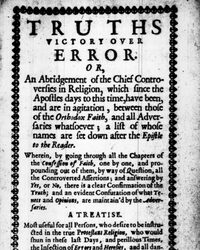
Whereas there is none that doth good, and sinneth not; and the best of men may through the power, and deceitfulness of their corruption dwelling in them, with the prevalency of temptation, fall into great sins, and provocations; God hath in the Covenant of Grace, mercifully provided that Beleivers so sinning, and falling,a be renewed through Repentance unto Salvation.b
a. Ecclesiastes 7:20
Ecclesiastes 7:20
7:20 For there is not a just man upon earth, that doeth good, and sinneth not.
7:20 Surely there is no righteous man on earth who does good and never sins.
King James VersionBerean Standard Bible
b. Luke 22:31–32
Luke 22:31–32
22:31 And the Lord said, Simon, Simon, behold, Satan hath desired to have you, that he may sift you as wheat: 22:32 But I have prayed for thee, that thy faith fail not: and when thou art converted, strengthen thy brethren.
22:31 Simon, Simon, Satan has asked to sift each of you like wheat. 22:32 But I have prayed for you, Simon, that your faith will not fail. And when you have turned back, strengthen your brothers."
King James VersionBerean Standard Bible
From Westminster Confession of Faith (1646) to Second London Baptist Confession of Faith (first printing) (1677)
Whereas there is none that doth good, and sinneth not, and the best of men may through the power and deceitfulness of their corruptions dwelling in them, with the prevalency of temptation, fall into great sins and provocations; God hath in the covenant of Grace mercifully provided, that Believers so sinning and falling, be renewed through repentance unto the Doctrine whereof is to be preached every Minister Gospel, as well as that Salvation.
Whereas there is none that doth good, and sinneth not; and the best of men may through the power, and deceitfulness of their corruption dwelling in them, with the prevalency of temptation, fall into great sins, and provocations; God hath in the Covenant of Grace, mercifully provided that Beleivers so sinning, and falling, be renewed through Repentance unto the Doctrine whereof is to be preached every Minister Gospel, as well as that Salvation.
Whereas there is none that doth good, and sinneth not; and the best of men may through the power, and deceitfulness of their corruptions corruption dwelling in them, with the prevalency of temptation, fall into great sins, and provocations; God hath in the Covenant of Grace, mercifully provided that Beleivers so sinning, and falling, be renewed through Repentance unto Salvation.
Repentance unto life, is an evangelicall grace, the Doctrine whereof is to be preached by every Minister of the Gospel, as well as that of faith in Christ.
Repentance unto life, is an evangelicall grace, the Doctrine whereof is to be preached by every Minister of the Gospel, as well as that of faith in Christ.
Whereas there is none that doth good, and sinneth not, and the best of men may through the power and deceitfulness of their corruptions dwelling in them, with the prevalency of temptation, fall into great sins and provocations; God hath in the covenant of Grace mercifully provided, that Believers so sinning and falling, be renewed through repentance unto Salvation.
Whereas there is none that doth good, and sinneth not, and the best of men may through the power and deceitfulness of their corruptions dwelling in them, with the prevalency of temptation, fall into great sins and provocations; God hath in the covenant of Grace mercifully provided, that Believers so sinning and falling, be renewed through repentance unto Salvation.
Second London Baptist Confession of Faith (first printing) (1677), Paragraph 15.2
Whereas there is none that doth good, and sinneth not; and the best of men may through the power, and deceitfulness of their corruption dwelling in them, with the prevalency of temptation, fall into great sins, and provocations; God hath in the Covenant of Grace, mercifully provided that Beleivers so sinning, and falling, be renewed through Repentance unto Salvation.
Whereas there is none that doth good, and sinneth not; and the best of men may through the power, and deceitfulness of their corruption dwelling in them, with the prevalency of temptation, fall into great sins, and provocations; God hath in the Covenant of Grace, mercifully provided that Beleivers so sinning, and falling, be renewed through Repentance unto Salvation.
Whereas there is none that does good, and sins not, and the best of men may through the power and deceitfulness of their corruptions dwelling in them, with the prevalency of temptation, fall into great sins and provocations; God has in the covenant of Grace mercifully provided, that Believers so sinning and falling, be renewed through repentance unto the Doctrine whereof is to be preached every Minister Gospel, as well as that Salvation.
Whereas there is none that doth good, and sinneth not; and the best of men may through the power, and deceitfulness of their corruption dwelling in them, with the prevalency of temptation, fall into great sins, and provocations; God hath in the Covenant of Grace, mercifully provided that Beleivers so sinning, and falling, be renewed through Repentance unto the Doctrine whereof is to be preached every Minister Gospel, as well as that Salvation.
Whereas there is none that doth good, and sinneth not; and the best of men may through the power, and deceitfulness of their corruptions corruption dwelling in them, with the prevalency of temptation, fall into great sins, and provocations; God hath in the Covenant of Grace, mercifully provided that Beleivers so sinning, and falling, be renewed through Repentance unto Salvation.
Repentance unto life, is an evangelical grace, the Doctrine whereof is to be preached by every Minister of the Gospel, as well as that of faith in Christ.
Repentance unto life, is an evangelicall grace, the Doctrine whereof is to be preached by every Minister of the Gospel, as well as that of faith in Christ.
Whereas there is none that does good, and sins not, and the best of men may through the power and deceitfulness of their corruptions dwelling in them, with the prevalency of temptation, fall into great sins and provocations; God has in the covenant of Grace mercifully provided, that Believers so sinning and falling, be renewed through repentance unto Salvation.
Whereas there is none that doth good, and sinneth not, and the best of men may through the power and deceitfulness of their corruptions dwelling in them, with the prevalency of temptation, fall into great sins and provocations; God hath in the covenant of Grace mercifully provided, that Believers so sinning and falling, be renewed through repentance unto Salvation.
Second London Baptist Confession of Faith (first printing) (1677), Paragraph 15.2
Whereas there is none that doth good, and sinneth not; and the best of men may through the power, and deceitfulness of their corruption dwelling in them, with the prevalency of temptation, fall into great sins, and provocations; God hath in the Covenant of Grace, mercifully provided that Beleivers so sinning, and falling, be renewed through Repentance unto Salvation.
Whereas there is none that doth good, and sinneth not; and the best of men may through the power, and deceitfulness of their corruption dwelling in them, with the prevalency of temptation, fall into great sins, and provocations; God hath in the Covenant of Grace, mercifully provided that Beleivers so sinning, and falling, be renewed through Repentance unto Salvation.
Whereas there is none that doth good, and sinneth not, and the best of Men may, through the power and deceitfulness of their Corruption dwelling in them, with the prevalency of Temptation, fall into greater Sins, and Provocations, God hath in the Covenant of Grace, mercifully provided that Believers so sinning, and falling, be renewed through Repentance unto Salvation.
By it, a sinner, out of the sight and sense not only of the danger, but also of the filthinesse and odiousnesse of his sins, as contrary to the holy nature, and righteous Law of God; and, upon the apprehension of his mercy in Christ to such as are penitent, so grieves for, and hates his sins, as to turn from them all unto God, purposing and endeavouring to walk with him in all the wayes of his Commandements.
Although Repentance be not to be rested in, as any satisfaction for sin, or any cause of the pardon thereof, which is the act of Gods free grace in Christ; yet is it of such necessity to all sinners, that none may expect pardon without it.
As every man is bound to make private confession of his sins to God, praying for the pardon thereof; upon which, and the forsaking of them, he shall finde mercy: so, he that scandalizeth his Brother, or the Church of Christ, ought to be willing by a private or publique confession, and sorrow for his sin, to declare his repentance to those that are offended, who are thereupon to be reconciled to him, and in love to receive him.
Is Repentance unto life, an Evangelical Grace, the Doctrine whereof is to be preached by every Minister of the Gospel; as well as that of Faith in Christ? Yes. Doth a sinner.…