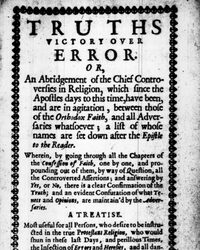
An Oath is to be taken in the plain and common sense of the words, without equivocation or mental reservation: It cannot oblige to sin, but in any thing not sinful being taken it bindes to performance, although to a mans own hurt; nor is it to be violated, although made to Hereticks or infidels.
An Oath is to be taken in the plain and common sense of the words, without equivocation or mental reservation: It cannot oblige to sin, but in any thing not sinful being taken it binds to performance, although to a mans own hurt; nor is it to be violated, although made to Heretics or infidels.
An Oath is to be taken in the plain and common sense of the words, without equivocation or mental reservation: It cannot oblige to sin, but in any thing not sinful being taken it bindes to performance, although to a mans own hurt; nor is it to be violated, although made to Hereticks or infidels.
An Oath is to be taken in the plain, and common sense of the words; without equivocation, or mental reservation.It cannot oblige to sin: but, in any thing not sinfull, being taken, it bindes to performance, although to a mans own hurt. Nor is it to be violated, although made to Hereticks, or Infidels.
An Oath is to be taken in the plain and common sence of the Words, without equivocation, or mental reservation.It cannot oblige to sin: but, in any thing not sinfull, being taken, it bindes to performance, although to a mans own hurt. Nor is it to be violated, although made to Hereticks, or Infidels.
An Oath is to be taken in the plain, and common sense of the words; without equivocation, or mental reservation.It cannot oblige to sin, but in any thing not sinful being taken it bindes to performance, although to a mans own hurt; nor is it to be violated, although made to Hereticks or infidels.
An Oath is to be taken in the plain and common sence of the Words, without equivocation, or mental reservation.It cannot oblige to sin, but in any thing not sinful being taken it bindes to performance, although to a mans own hurt; nor is it to be violated, although made to Hereticks or infidels.
An Oath is to be taken in the plain and common sense of the words, without equivocation, or mental reservation. It cannot oblige to sin: but, in any thing not sinfull, being taken, it bindes to performance, although to a mans own hurt. Nor is it to be violated, although made to Hereticks, or Infidels.
An Oath is to be taken in the plain and common sense of the words, without equivocation, or mental reservation. It cannot oblige to sin: but, in any thing not sinfull, being taken, it bindes to performance, although to a mans own hurt. Nor is it to be violated, although made to Hereticks, or Infidels.
An Oath is to be taken in the plain and common sense of the words, without equivocation, or mental reservation. It cannot oblige to sin: but, in any thing not sinfull, being taken, it bindes to performance, although to a mans own hurt. Nor is it to be violated, although made to Hereticks, or Infidels.
Savoy Declaration of Faith and Order (1658), Paragraph 23.4
An Oath is to be taken in the plain and common sense of the words, without equivocation or mental reservation: It cannot oblige to sin, but in any thing not sinful being taken it bindes to performance, although to a mans own hurt; nor is it to be violated, although made to Hereticks or infidels.
An Oath is to be taken in the plain and common sense of the words, without equivocation or mental reservation: It cannot oblige to sin, but in any thing not sinful being taken it bindes to performance, although to a mans own hurt; nor is it to be violated, although made to Hereticks or infidels.
An Oath is to be taken in the plain and common sense of the words, without equivocation or mental reservation: It cannot oblige to sin, but in any thing not sinful being taken it bindes to performance, although to a mans own hurt; nor is it to be violated, although made to Hereticks or infidels.
An Oath is to be taken in the plain and common sense of the words, without equivocation or mental reservation: It cannot oblige to sin, but in any thing not sinful being taken it binds to performance, although to a mans own hurt; nor is it to be violated, although made to Heretics or infidels.
An Oath is to be taken in the plain, and common sense of the words; without equivocation, or mental reservation.It cannot oblige to sin: but, in any thing not sinfull, being taken, it bindes to performance, although to a mans own hurt. Nor is it to be violated, although made to Hereticks, or Infidels.
An Oath is to be taken in the plain and common sense of the Words, without equivocation, or mental reservation.It cannot oblige to sin: but, in any thing not sinful, being taken, it binds to performance, although to a mans own hurt. Nor is it to be violated, although made to Heretics, or Infidels.
An Oath is to be taken in the plain, and common sense of the words; without equivocation, or mental reservation.It cannot oblige to sin, but in any thing not sinful being taken it bindes to performance, although to a mans own hurt; nor is it to be violated, although made to Hereticks or infidels.
An Oath is to be taken in the plain and common sense of the Words, without equivocation, or mental reservation.It cannot oblige to sin, but in any thing not sinful being taken it binds to performance, although to a mans own hurt; nor is it to be violated, although made to Heretics or infidels.
An Oath is to be taken in the plain and common sense of the words, without equivocation, or mental reservation. It cannot oblige to sin: but, in any thing not sinful, being taken, it binds to performance, although to a mans own hurt. Nor is it to be violated, although made to Heretics, or Infidels.
An Oath is to be taken in the plain and common sense of the words, without equivocation, or mental reservation. It cannot oblige to sin: but, in any thing not sinfull, being taken, it bindes to performance, although to a mans own hurt. Nor is it to be violated, although made to Hereticks, or Infidels.
An Oath is to be taken in the plain and common sense of the words, without equivocation, or mental reservation. It cannot oblige to sin: but, in any thing not sinful, being taken, it binds to performance, although to a mans own hurt. Nor is it to be violated, although made to Heretics, or Infidels.
Savoy Declaration of Faith and Order (1658), Paragraph 23.4
An Oath is to be taken in the plain and common sense of the words, without equivocation or mental reservation: It cannot oblige to sin, but in any thing not sinful being taken it binds to performance, although to a mans own hurt; nor is it to be violated, although made to Heretics or infidels.
An Oath is to be taken in the plain and common sense of the words, without equivocation or mental reservation: It cannot oblige to sin, but in any thing not sinful being taken it bindes to performance, although to a mans own hurt; nor is it to be violated, although made to Hereticks or infidels.
An Oath is to be taken in the plain and common sense of the words, without equivocation or mental reservation: It cannot oblige to sin, but in any thing not sinful being taken it binds to performance, although to a mans own hurt; nor is it to be violated, although made to Heretics or infidels.
Is the name of GOD, that only by which men ought to swear? Yes. Is an Oath warranted by the word of GOD, under the New Testament, as well, as under the Old, in matters of weight,…